The Abrahamic Family House
The Abrahamic Family House is located on Saadiyat Island in Abu Dhabi, the capital of the United Arab Emirates.
📍 Address: Saadiyat Island, Cultural District, Abu Dhabi, UAE
The complex sits within the island’s Cultural District, close to major landmarks such as Louvre Abu Dhabi and the future Zayed National Museum, placing it at the very heart of Abu Dhabi’s emerging cultural landscape.
Photos
Dialogue in Stone, Light, and Silence
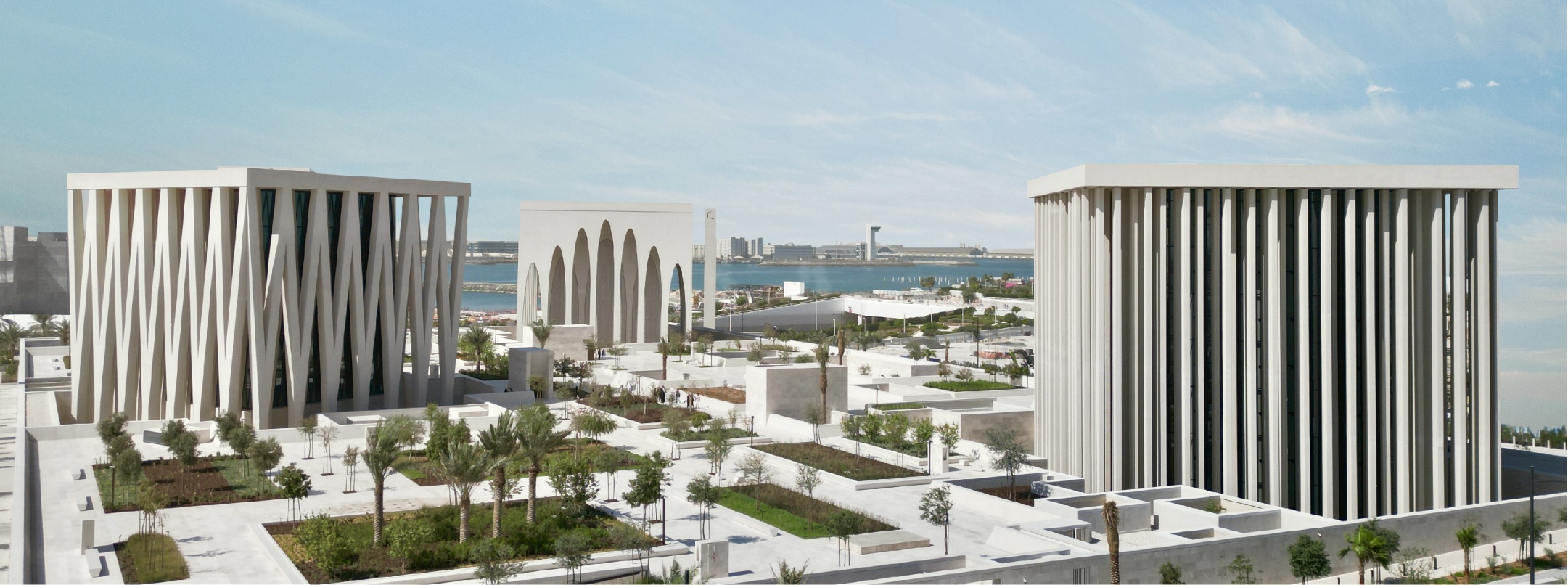
In the heart of Saadiyat Island — where the museums of the future are rapidly taking shape — there is a place where architecture speaks the language of peace and understanding. The Abrahamic Family House is a unique interfaith complex that brings together a mosque, a church, and a synagogue, standing in balanced harmony with one another. It has become a powerful symbol of hope for dialogue between the three world religions that trace their origins to a single patriarch — Abraham.
The idea for the complex was born in 2019, following the historic meeting in Abu Dhabi between Pope Francis and the Grand Imam of Al-Azhar, Sheikh Ahmed El-Tayeb. During that visit, they signed the Document on Human Fraternity — a moral and spiritual manifesto that marked the beginning of a new era of interreligious cooperation. In 2020, the architectural vision was unveiled, designed by renowned Ghanaian-British architect Sir David Adjaye. His concept placed the three houses of worship on the same level, symbolizing equality, mutual respect, and recognition.
Construction lasted more than three years and was completed in 2023. Each of the three buildings — the Imam Al-Tayeb Mosque, St. Francis Church, and the Moses Ben Maimon Synagogue — reflects the architectural language of its respective faith, while remaining united by a shared spatial logic and overarching design philosophy. The Abrahamic Family House is not merely an architectural landmark, but a living cultural center, open to people of all beliefs and backgrounds. Guided tours, dialogue sessions, exhibitions, and prayers take place here, making it a meeting point between past and future, faith and art, silence and light.
A Space of Harmony: Three Houses, Three Faiths
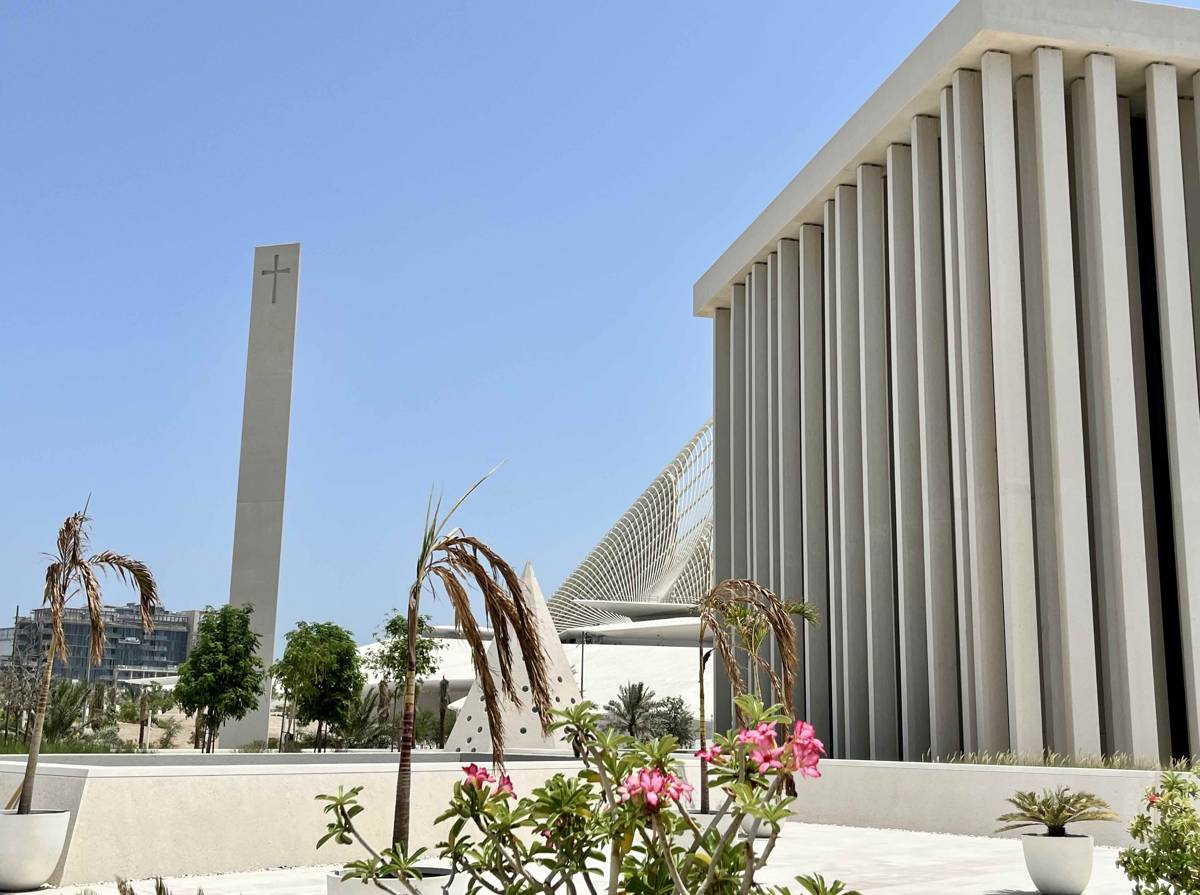
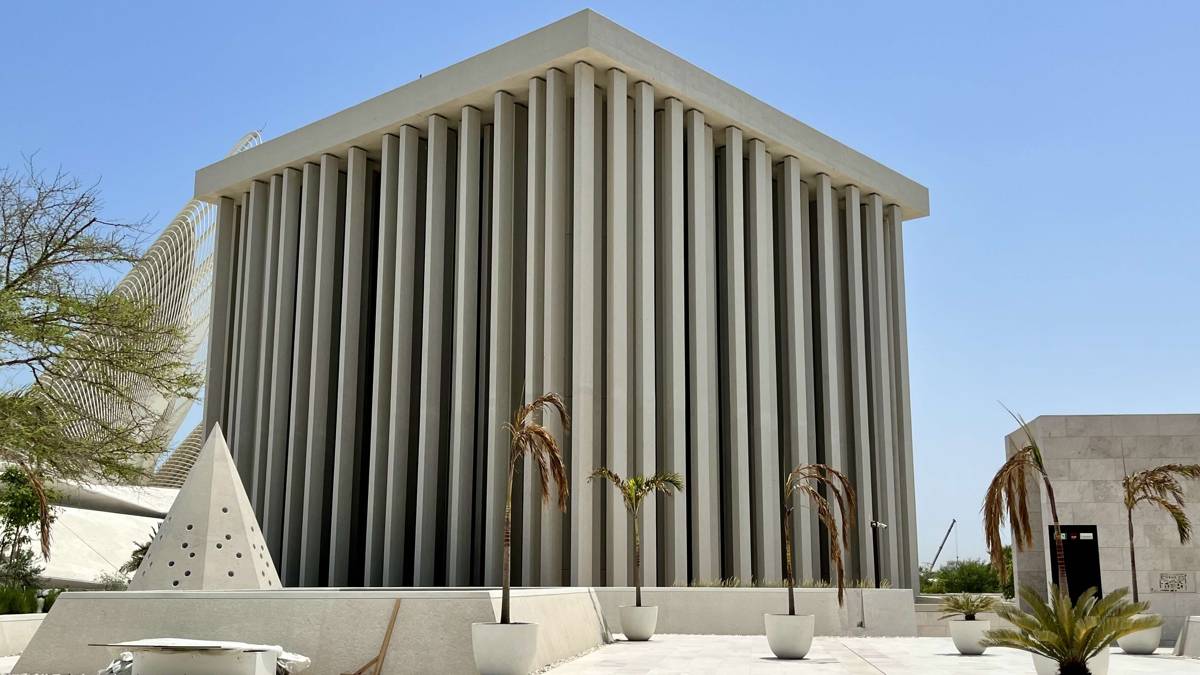
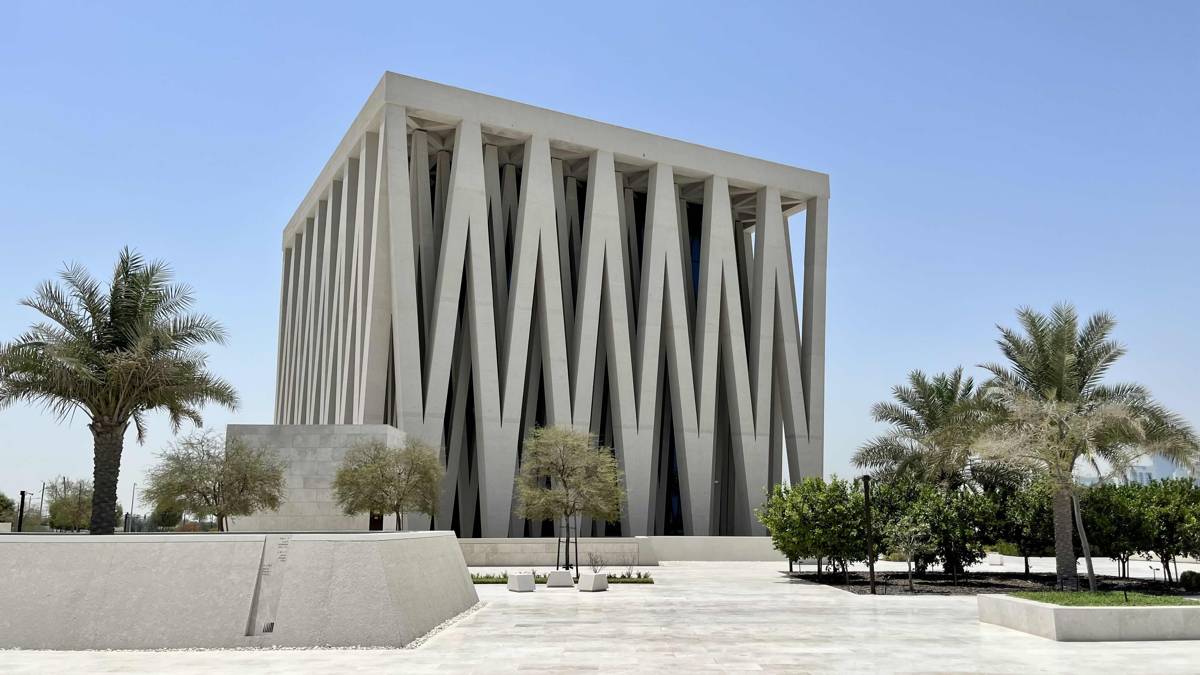
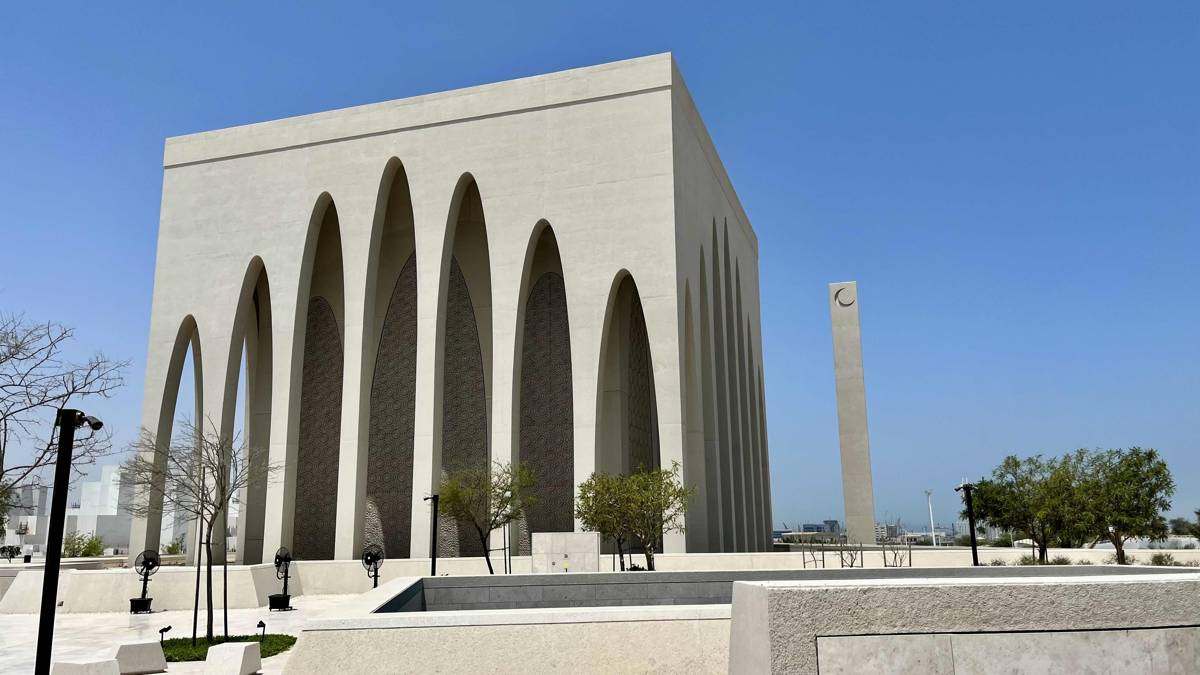
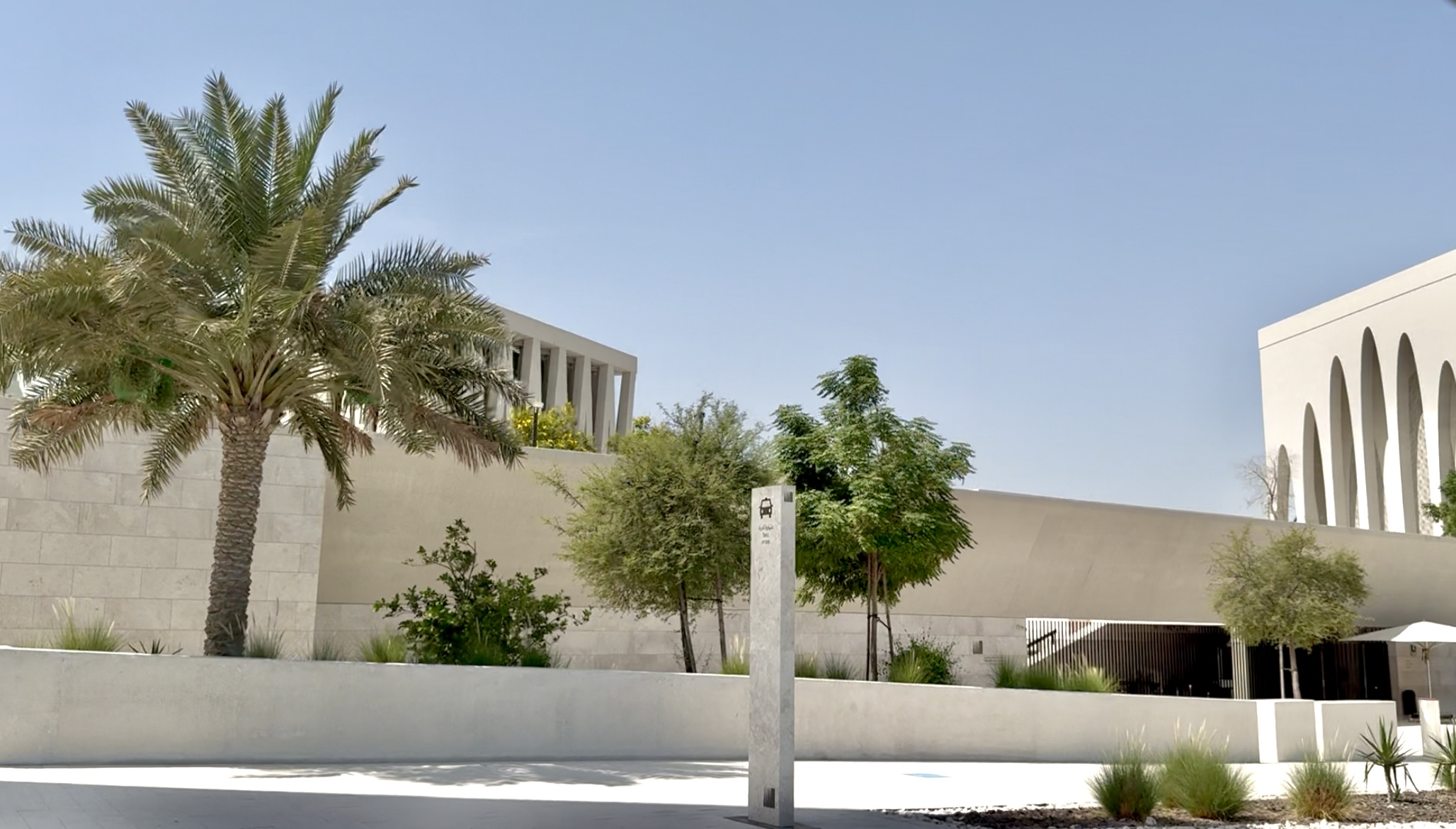
The complex consists of three monumental cubic buildings, designed in a unified architectural language, yet each expressing the spiritual and cultural essence of its tradition. The mosque, church, and synagogue stand side by side like three sisters — distinct, dignified, and respectful of one another. Their shared form, the perfect cube, represents equality and stability, while the inner worlds of each structure are entirely unique.
Between them lies an open forum — a public space dedicated to dialogue, cultural exchange, and education. This forum is the heart of the Abrahamic Family House, intentionally free of religious symbols. It is a neutral ground where people meet beyond differences, speaking the shared language of humanity. Lectures, exhibitions, discussions, and community events are held here, all aimed at fostering mutual understanding between faiths.
The spatial organization is carefully considered: each house of worship has its own entrance, yet all are connected through this shared civic space. Light, silence, and openness are the defining elements, creating an atmosphere of respect and contemplation. There are no heavy walls — only pure geometry, natural materials, and streams of light that quietly communicate peace.
Imam Al-Tayeb Mosque
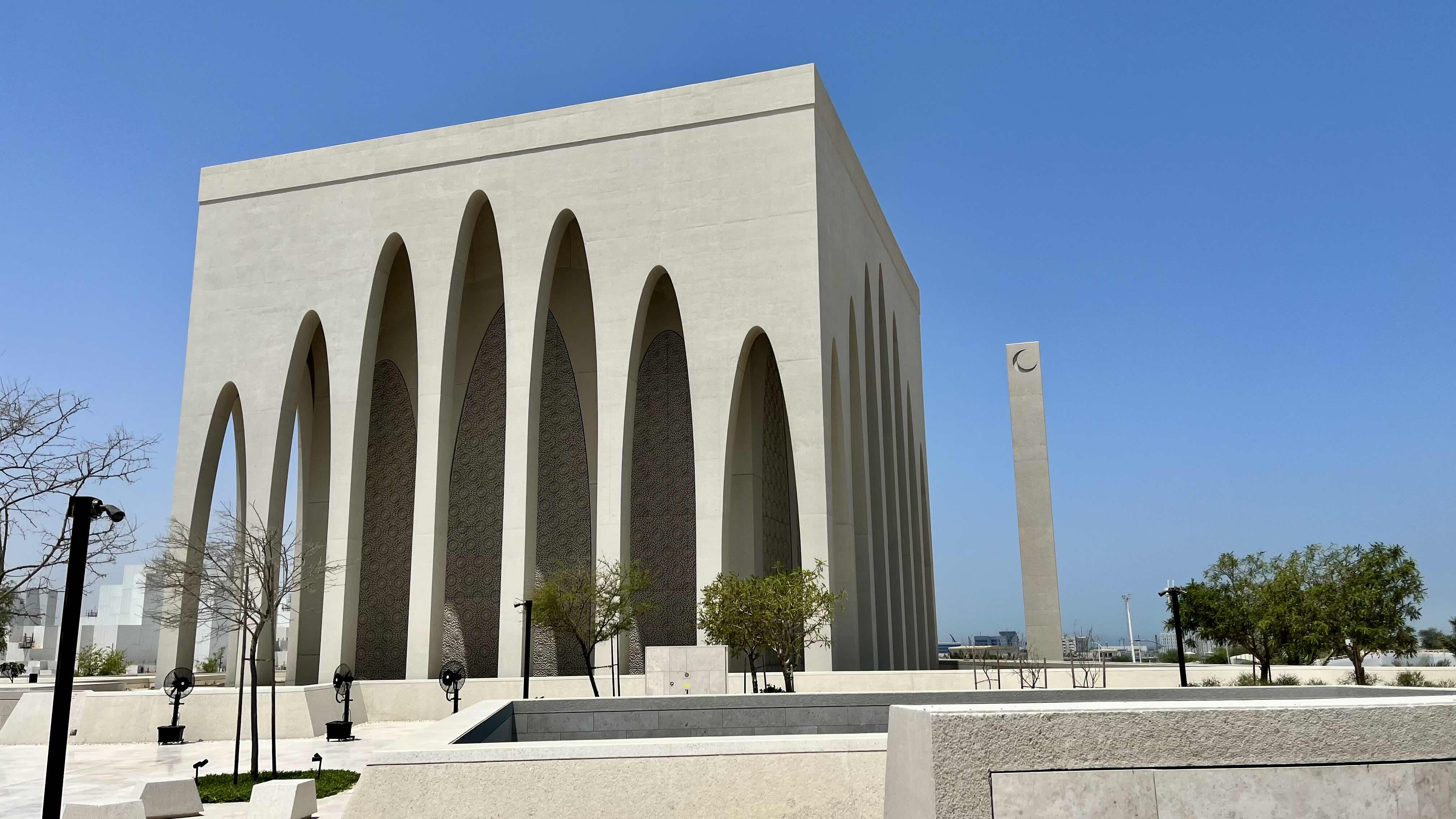
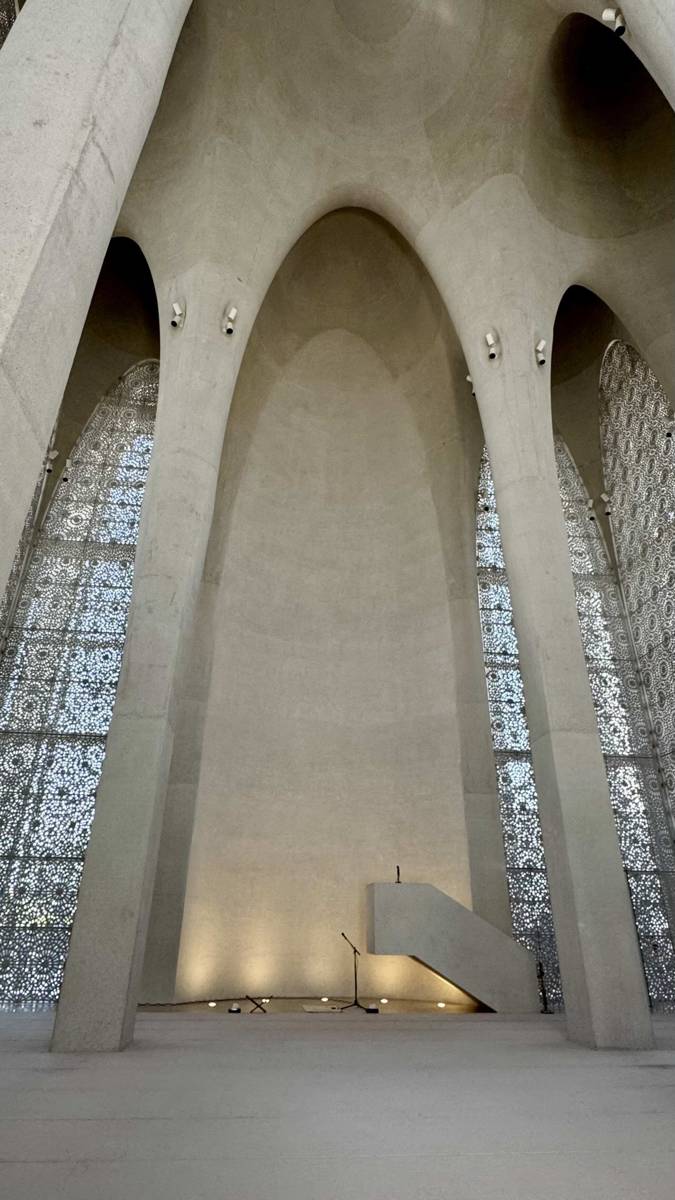
Quiet and restrained, the mosque seems to absorb the light that filters through its delicately patterned walls. Its architecture draws on traditional Islamic principles, where rhythm, symmetry, and calm become a language of spirituality. The façades are cut by seven elongated arches — a reference to the seven heavens, the seven days of creation, and the seven circuits of the Hajj.
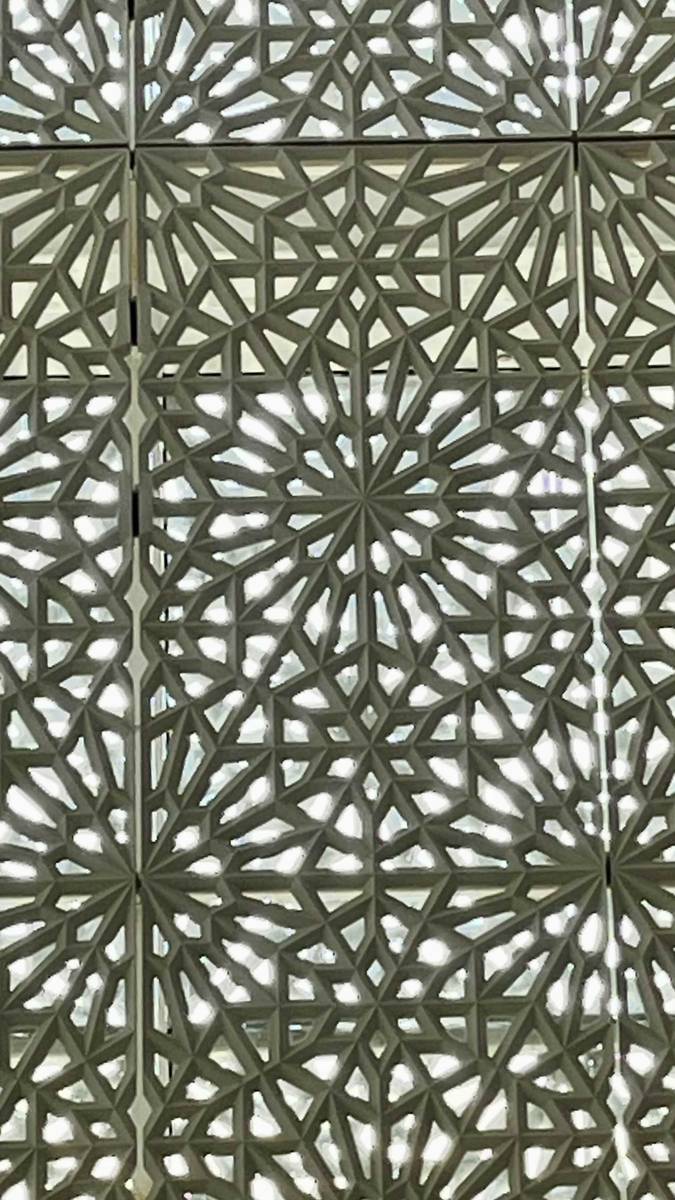
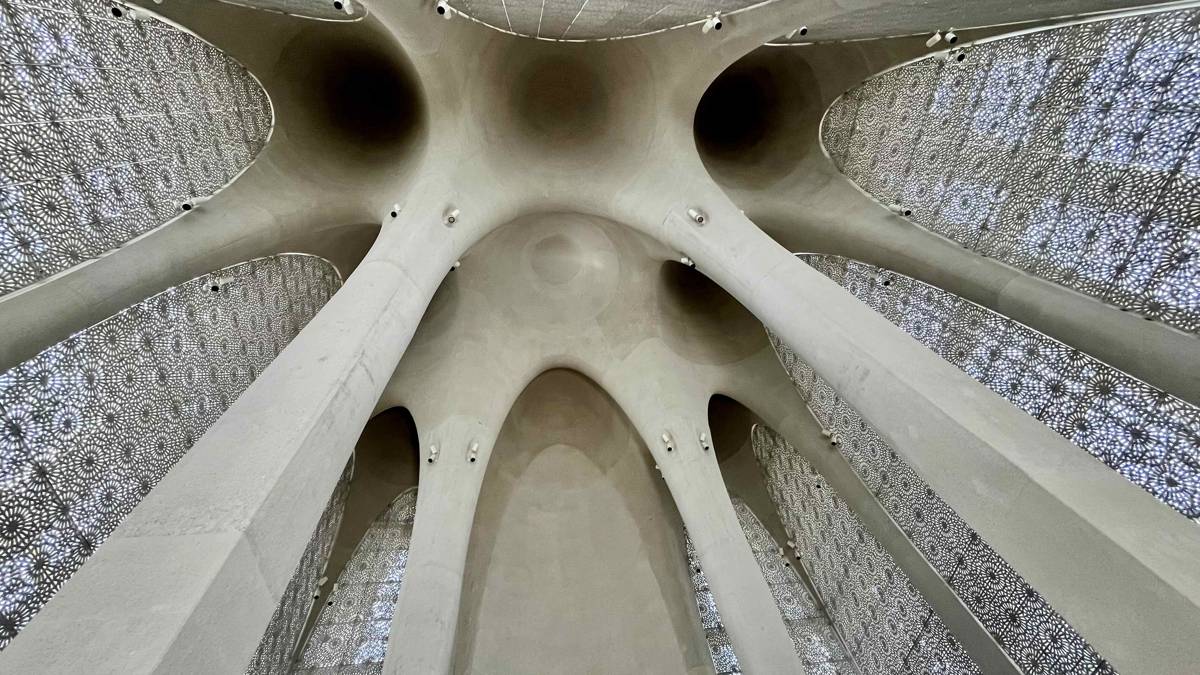
Particularly striking is the geometric latticework of the façades, crafted in the tradition of mashrabiya. Beyond its visual elegance, this intricate screen serves a functional purpose: it allows soft daylight to enter the interior while preserving privacy. The result is a sense of protection and seclusion, paired with a subtle connection to the surrounding world.
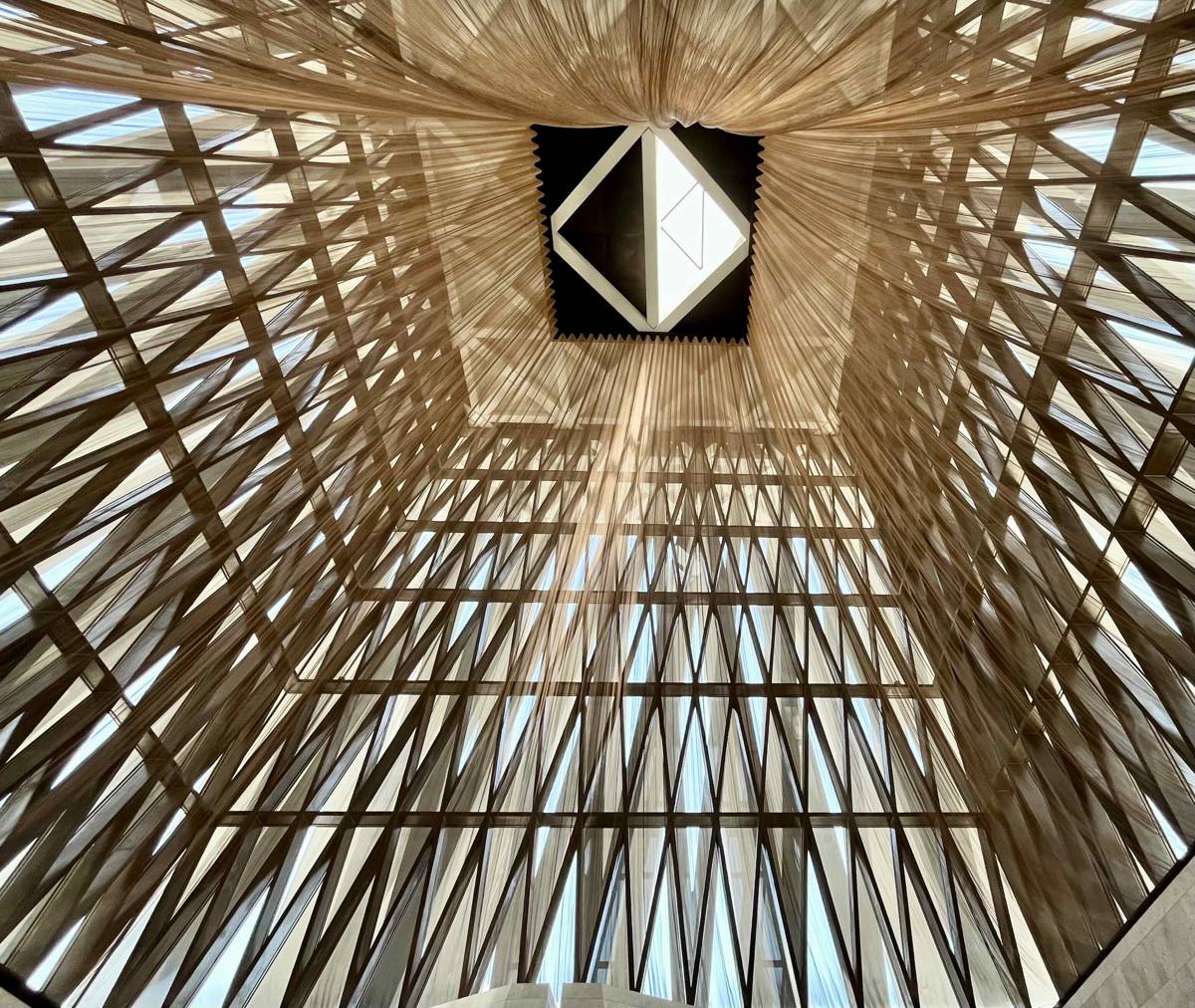
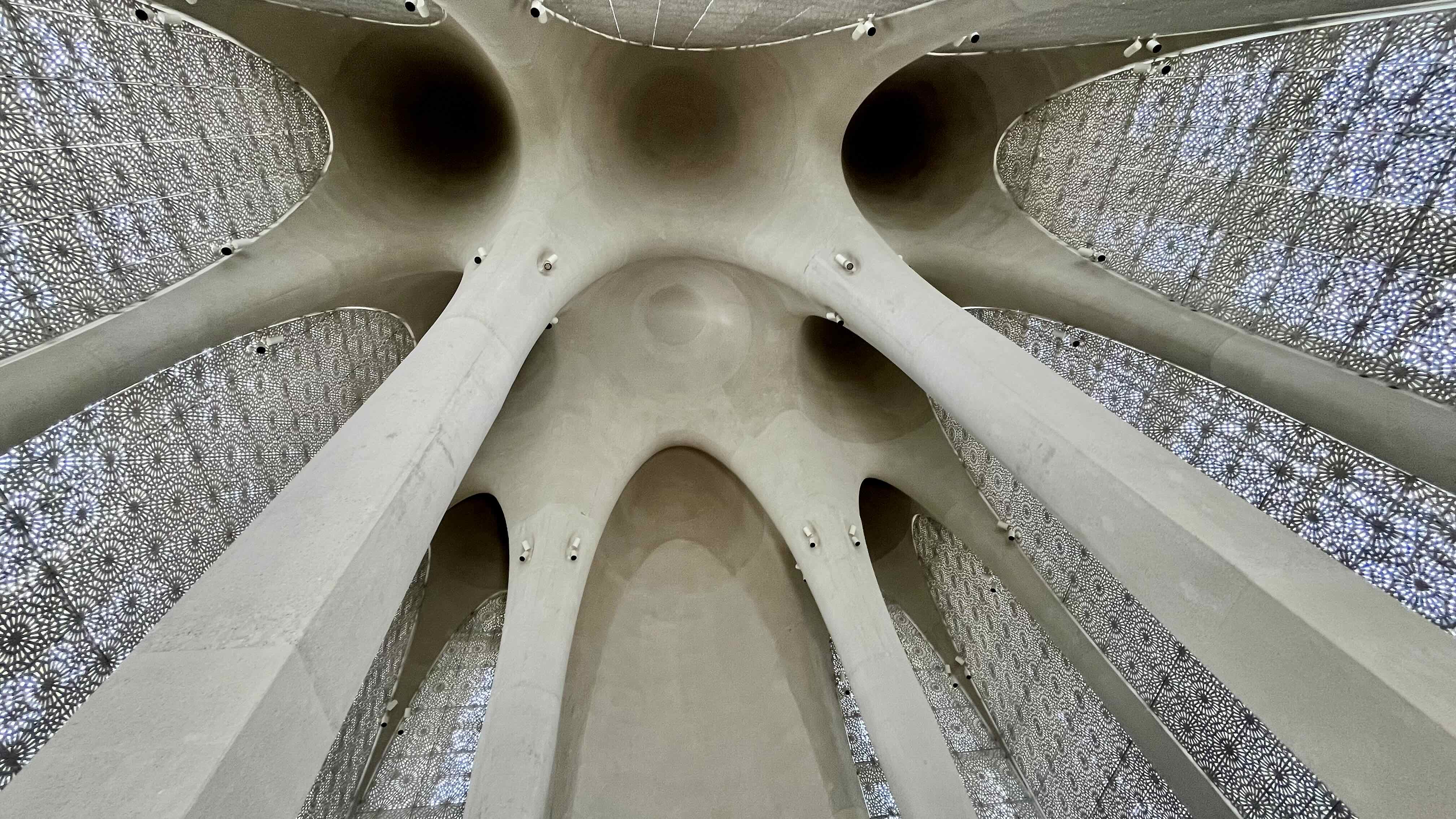
At the heart of the interior lies an open prayer hall, bathed in diffused light. The dome, supported by slender columns, appears to float above the space, enhancing the feeling of openness and serenity. The ceiling is inspired by the Cave of Hira, where, according to Islamic tradition, the Prophet Muhammad received his first revelation. The architects sought to evoke the atmosphere of solitude and profound spiritual experience associated with that place — the ceiling envelops visitors in a gentle shadow, encouraging reflection and inner silence.
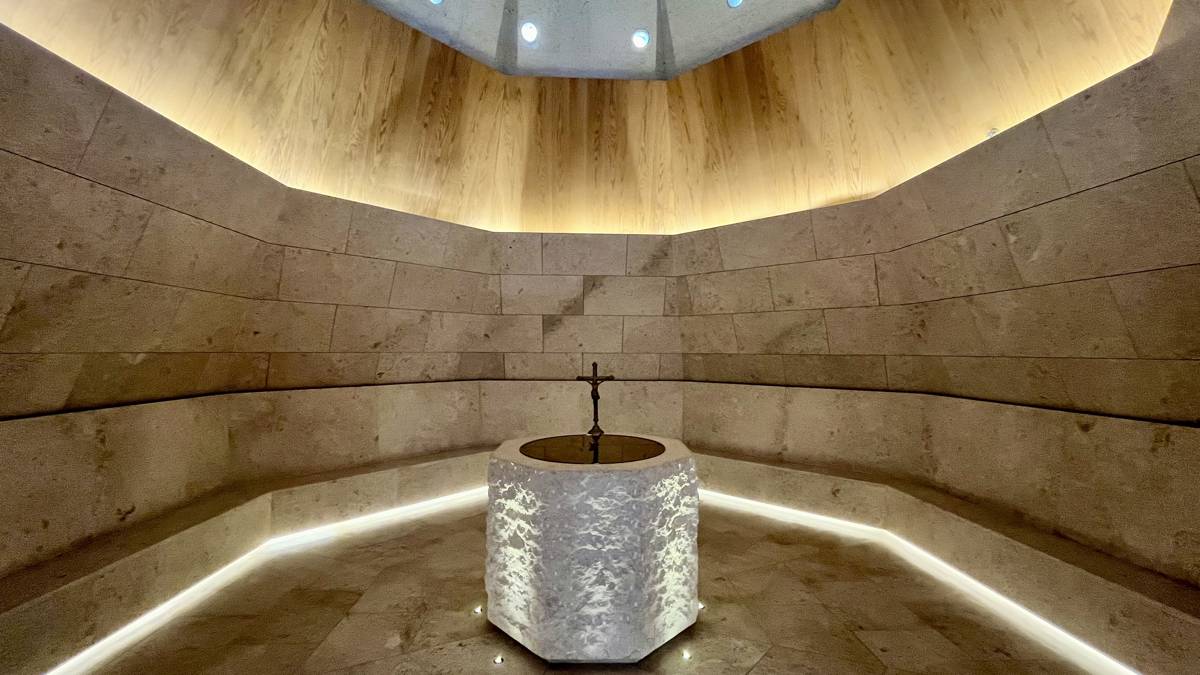
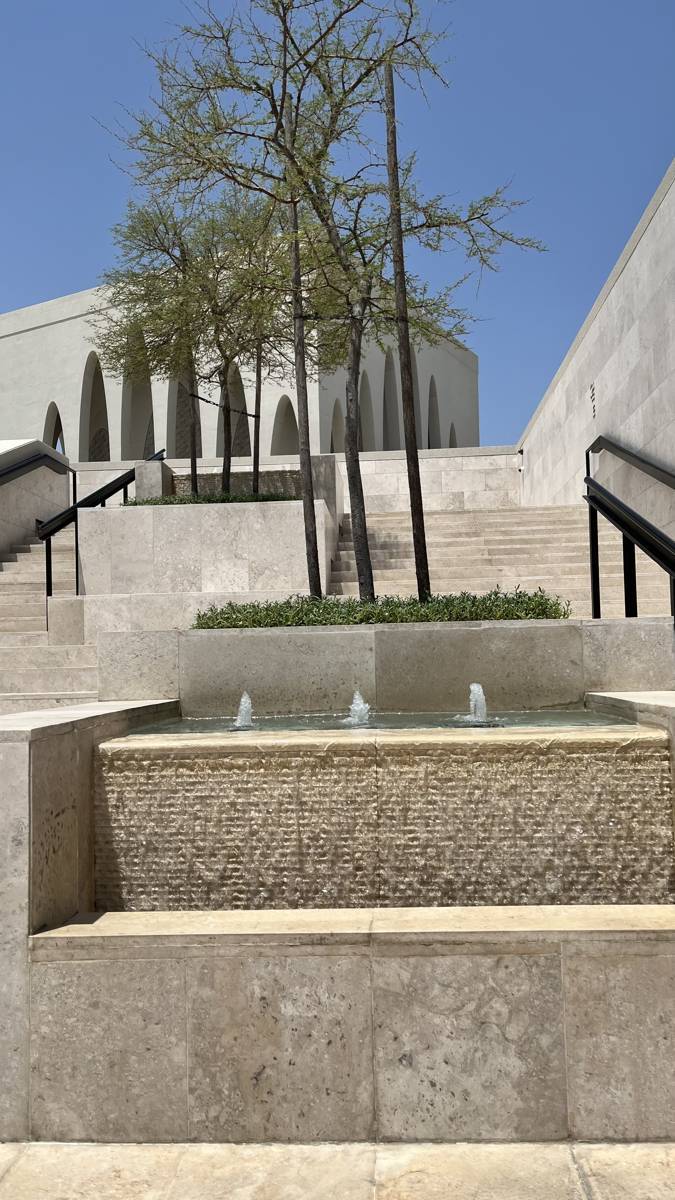
As with the other two sanctuaries, water welcomes visitors at the entrance. The mosque’s inner courtyard includes separate male and female ablution areas, concealed behind bronze gates that echo the rhythm of the façade arches. Water — a symbol of purification, life, and sanctity — becomes a shared element across all three religions, quietly emphasizing their common roots.
St. Francis Church
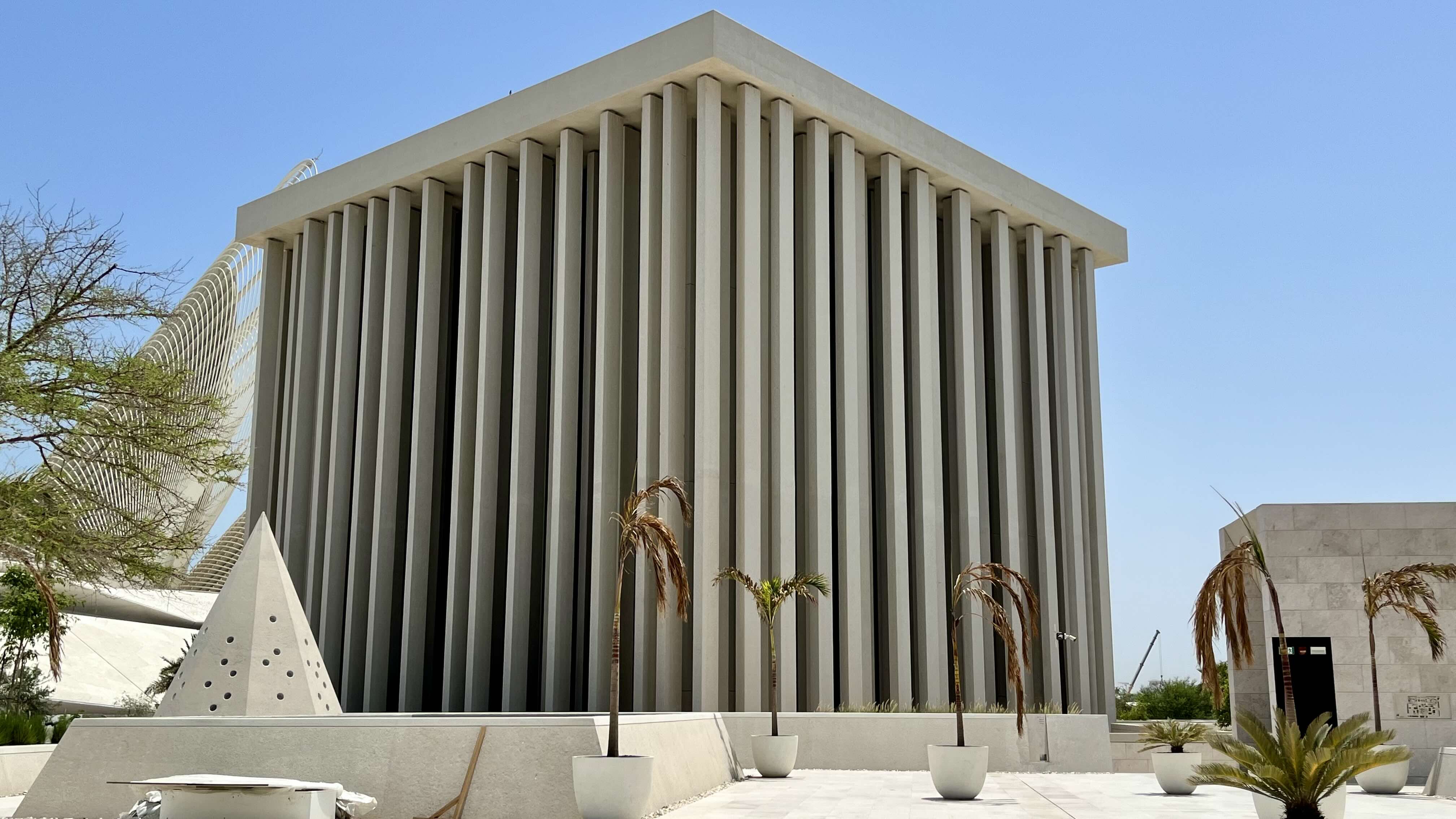
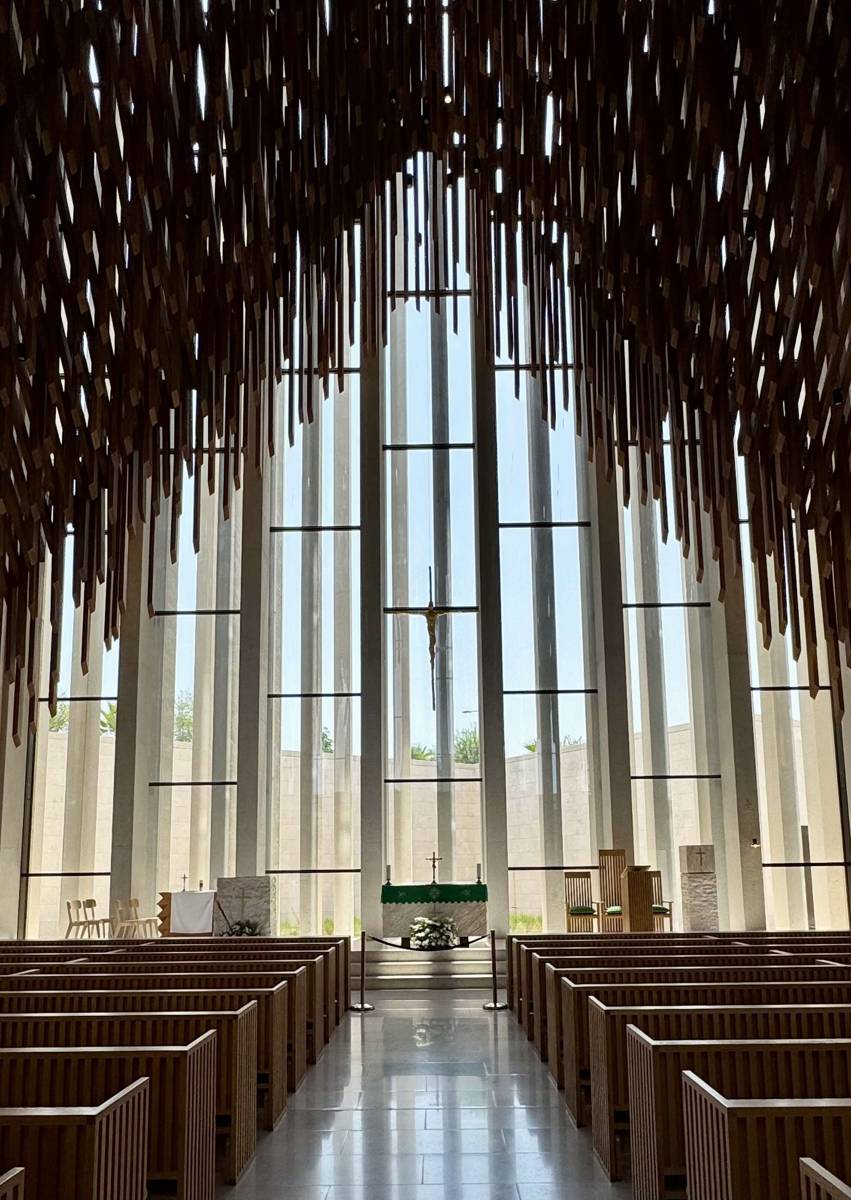
St. Francis Church embodies openness and humility. Unlike the grandeur often associated with traditional churches, this space embraces simplicity elevated to architectural grace. Light-filled and transparent, the church seems to breathe silence, inviting anyone — regardless of faith — to sit, pause, and simply be.
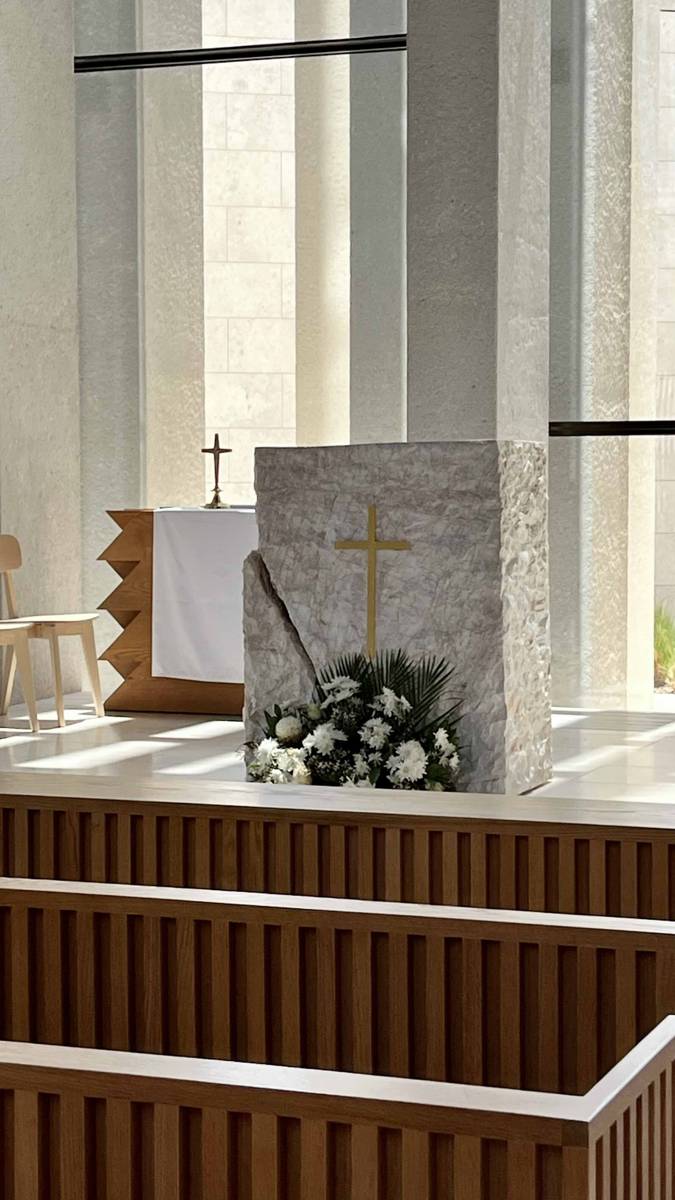
The interior follows principles of minimalism and natural honesty. The altar is carved from raw stone, seemingly drawn directly from the earth, with a delicate inlay of a cross. This powerful monolith symbolizes the firmness of faith and quiet strength of spirit, while fresh flowers at its base introduce warmth and life.
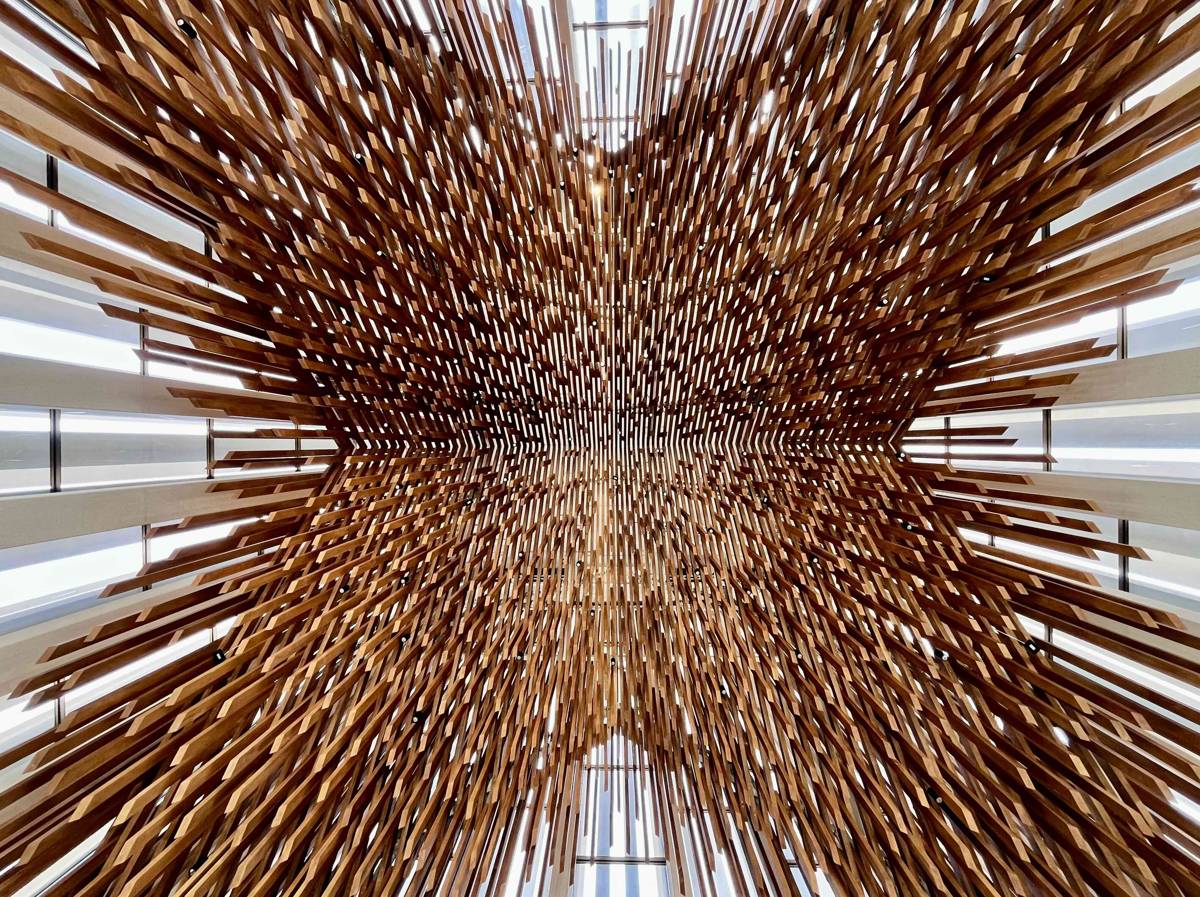
Above, a remarkable wooden ceiling composed of hundreds of slender slats forms a dynamic, almost floating structure. It shapes the acoustics of the space and evokes the image of light rising from within — a metaphor for hope and blessing descending gently upon those below.
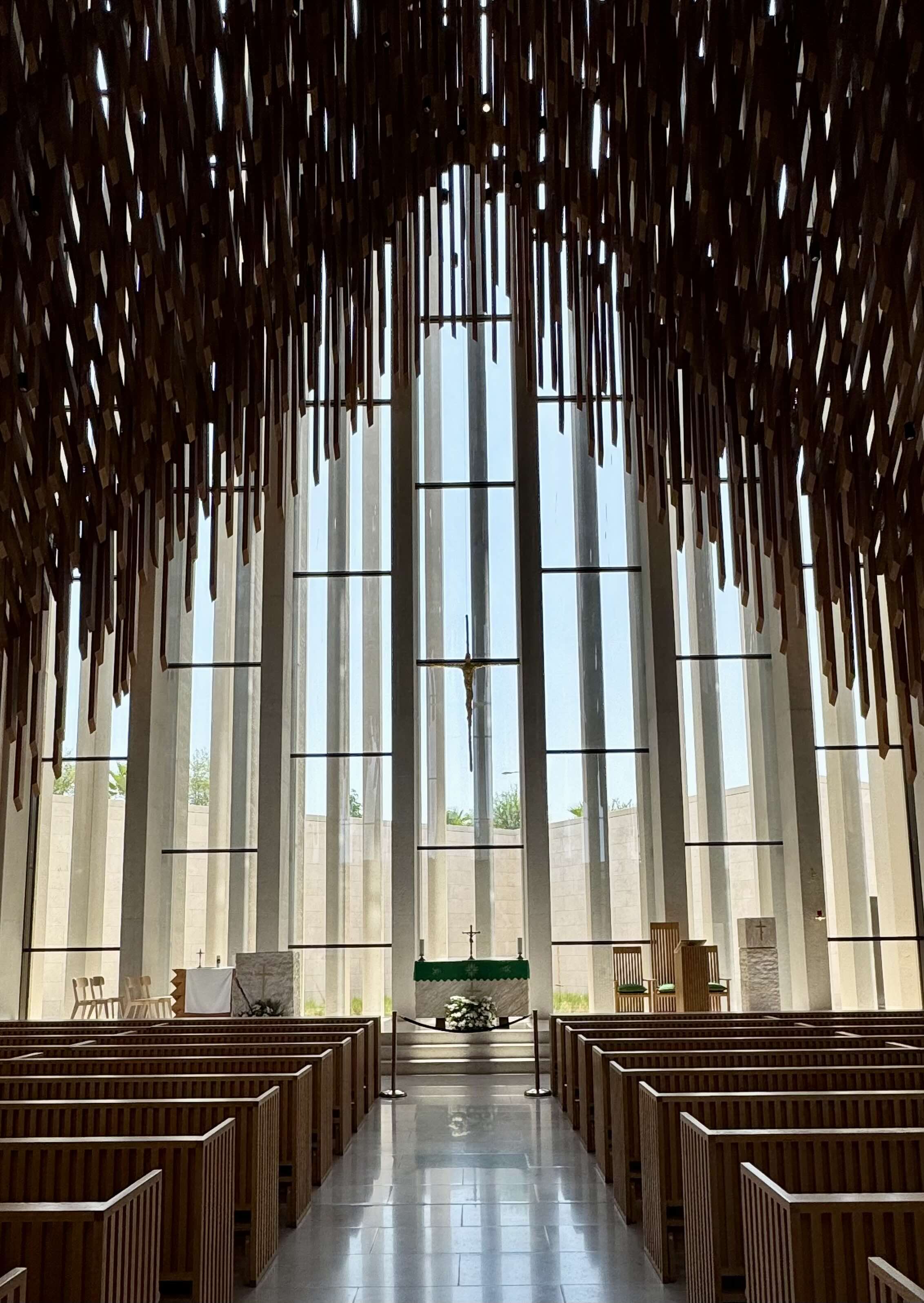
The walls are defined by a rhythm of light and shadow. Narrow vertical openings allow daylight to enter softly, changing throughout the day. Morning, afternoon, and evening light each give the space a different character, ensuring that no two visits feel the same.
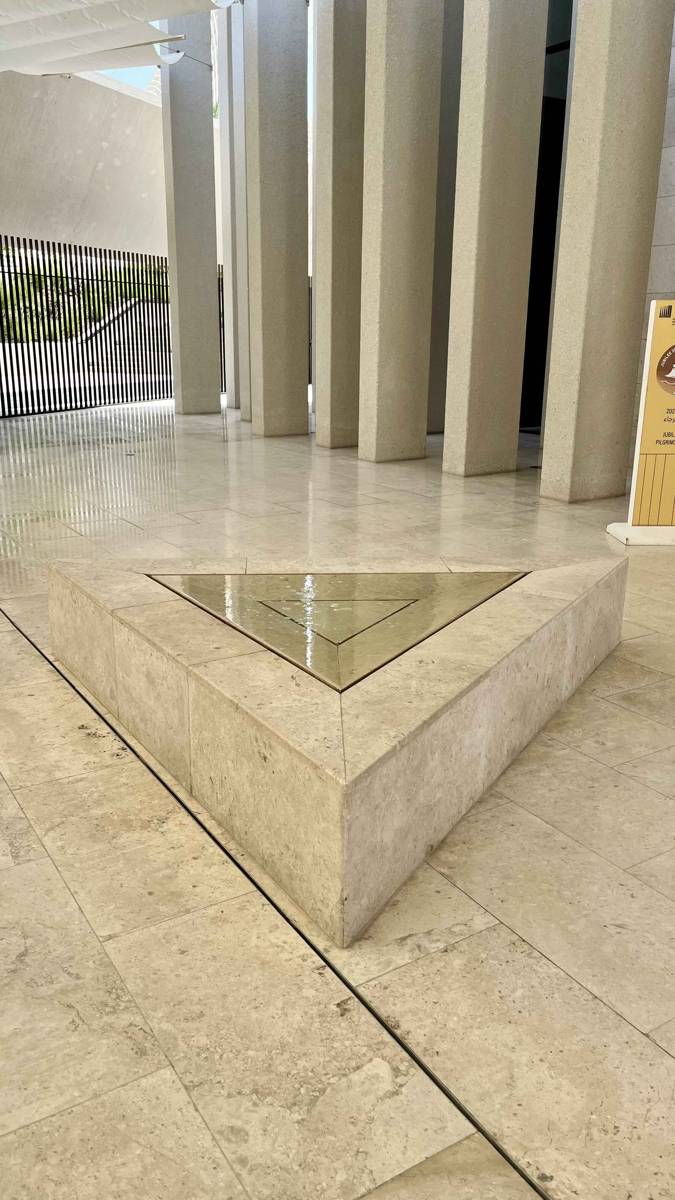
As elsewhere in the complex, a water feature marks the entrance — a reminder of baptism and spiritual renewal. Once again, water becomes the unifying symbol, connecting the three faiths through shared meaning.
Moses Ben Maimon Synagogue
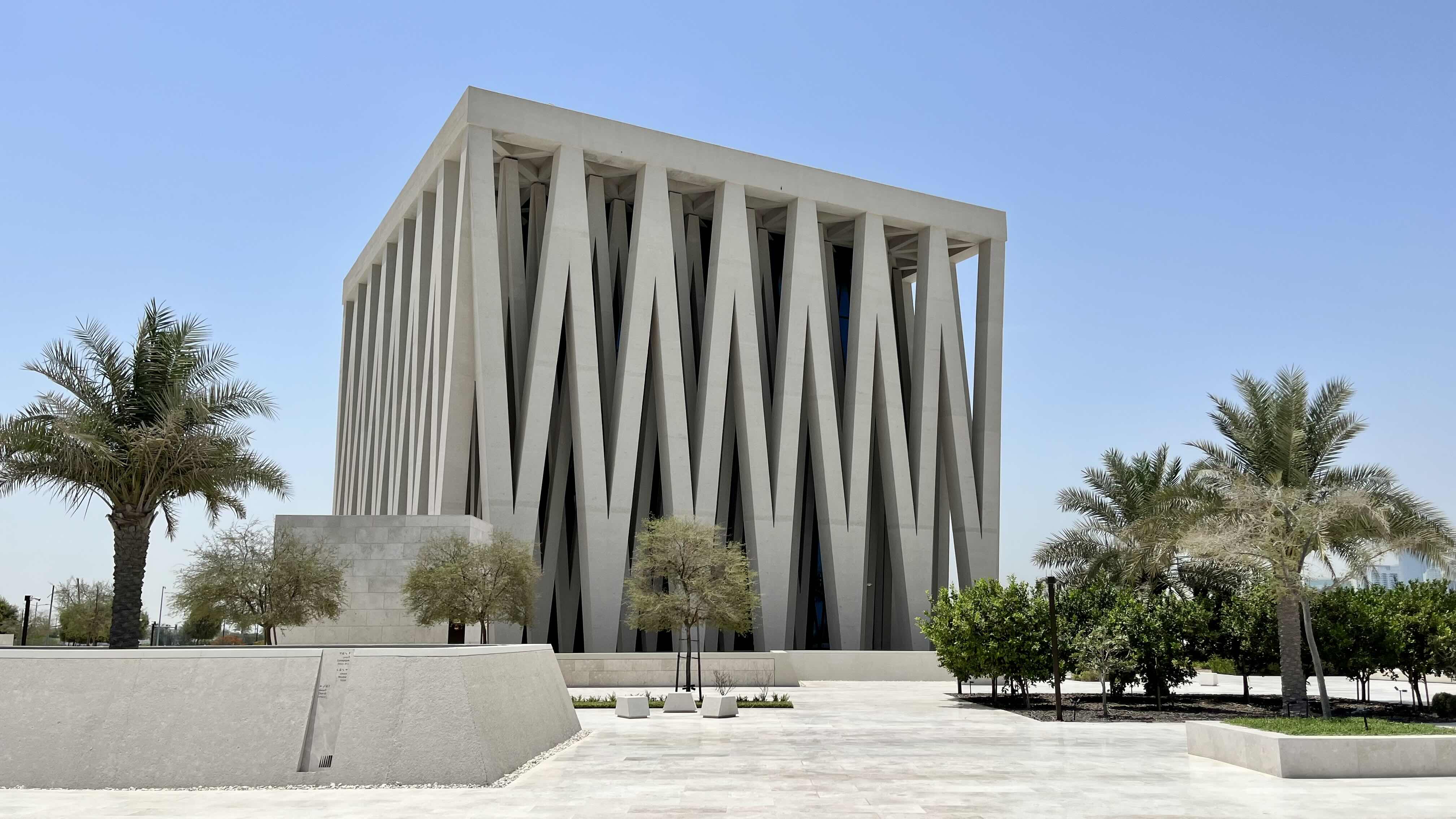
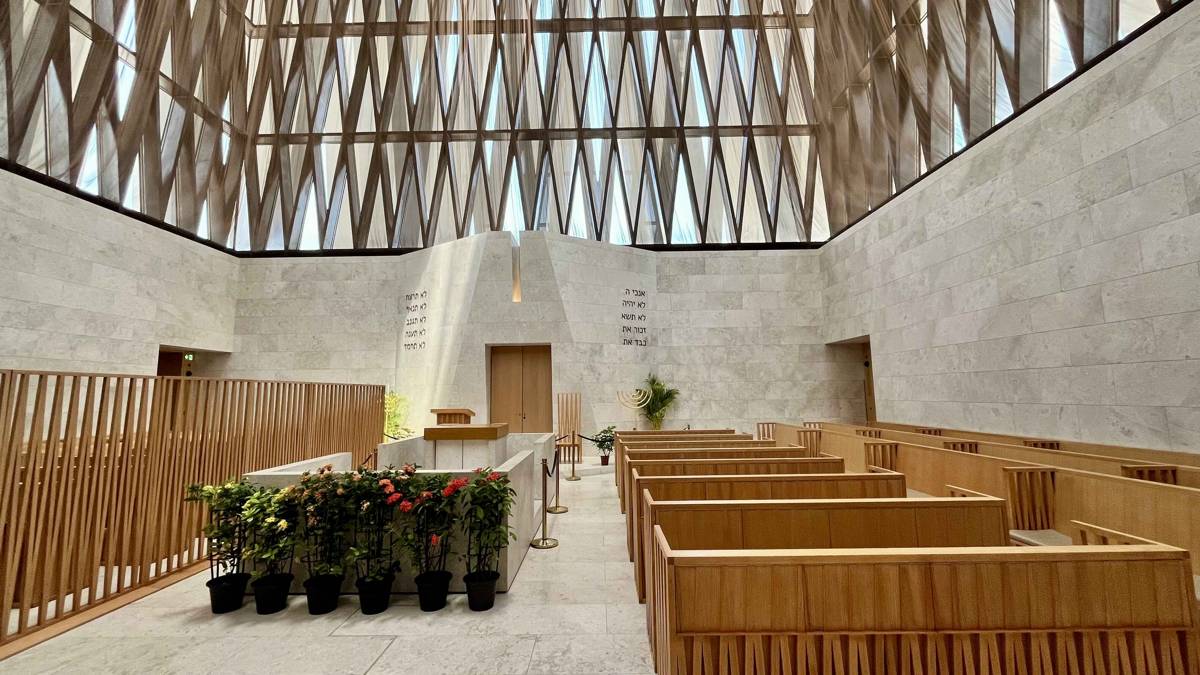
The Moses Ben Maimon Synagogue is a space of wisdom and illumination — an architectural meditation on continuity and learning. It feels built not only of stone and light, but of quiet conversations, the rustle of sacred scrolls, and focused contemplation. From the first moment, its restrained geometry and precision speak of a tradition shaped by study, prayer, and reflection.
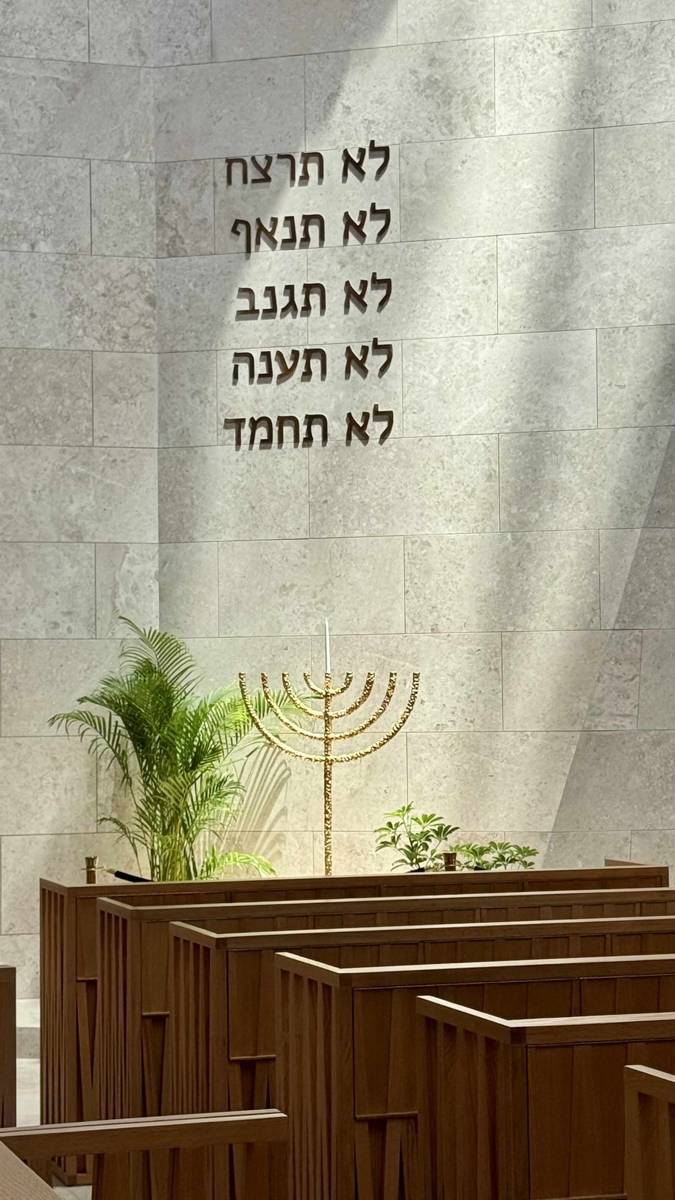
The heart of the synagogue is the Torah Ark, set into a niche on the eastern wall and illuminated by natural light. This focal point defines the symmetry and order of the entire space. Seating is arranged so that nothing distracts from what matters most. The Ark itself is crafted from light stone, its subtle carvings emphasizing the sanctity of the scrolls it holds.
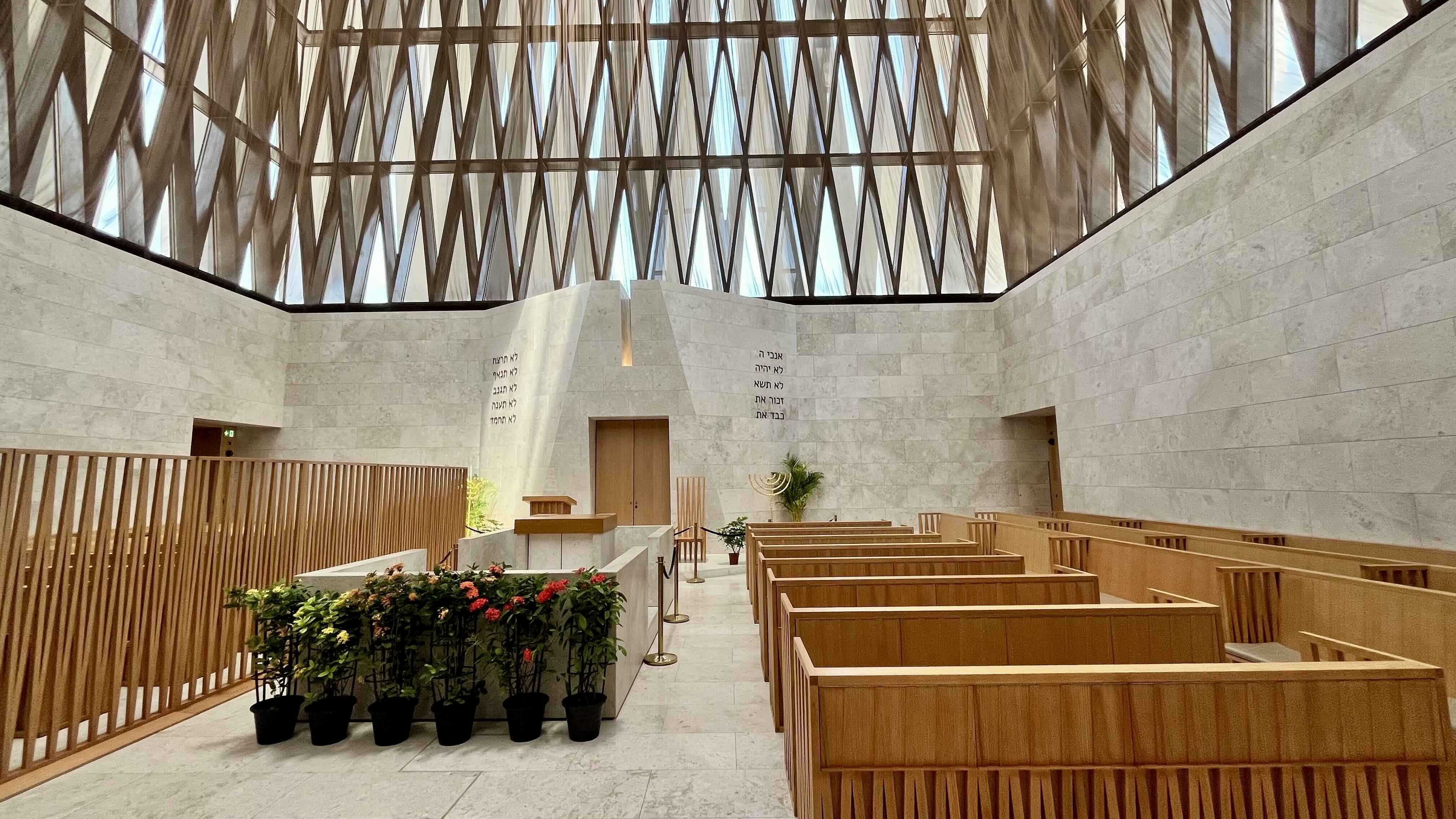
Light plays a central role. Narrow vertical openings allow gentle rays to enter, casting fine, almost graphic shadows on the walls. This is more than aesthetic beauty — it is a metaphor for enlightenment achieved through knowledge, prayer, and thought. Here, light does not dominate; it accompanies, like a patient teacher.
The interior palette is calm and natural: wood, limestone, soft plaster. It is a background that quietly insists: “Here, the word comes first.” Special attention is drawn to the bimah, the raised platform from which the Torah is read, distinguished by refined wooden detailing that bridges tradition with contemporary restraint.
At the entrance, as in the other buildings, a water basin marks the threshold — a gesture of preparation and purification before prayer, reinforcing the shared symbolism that runs throughout the complex.
The Garden That Unites
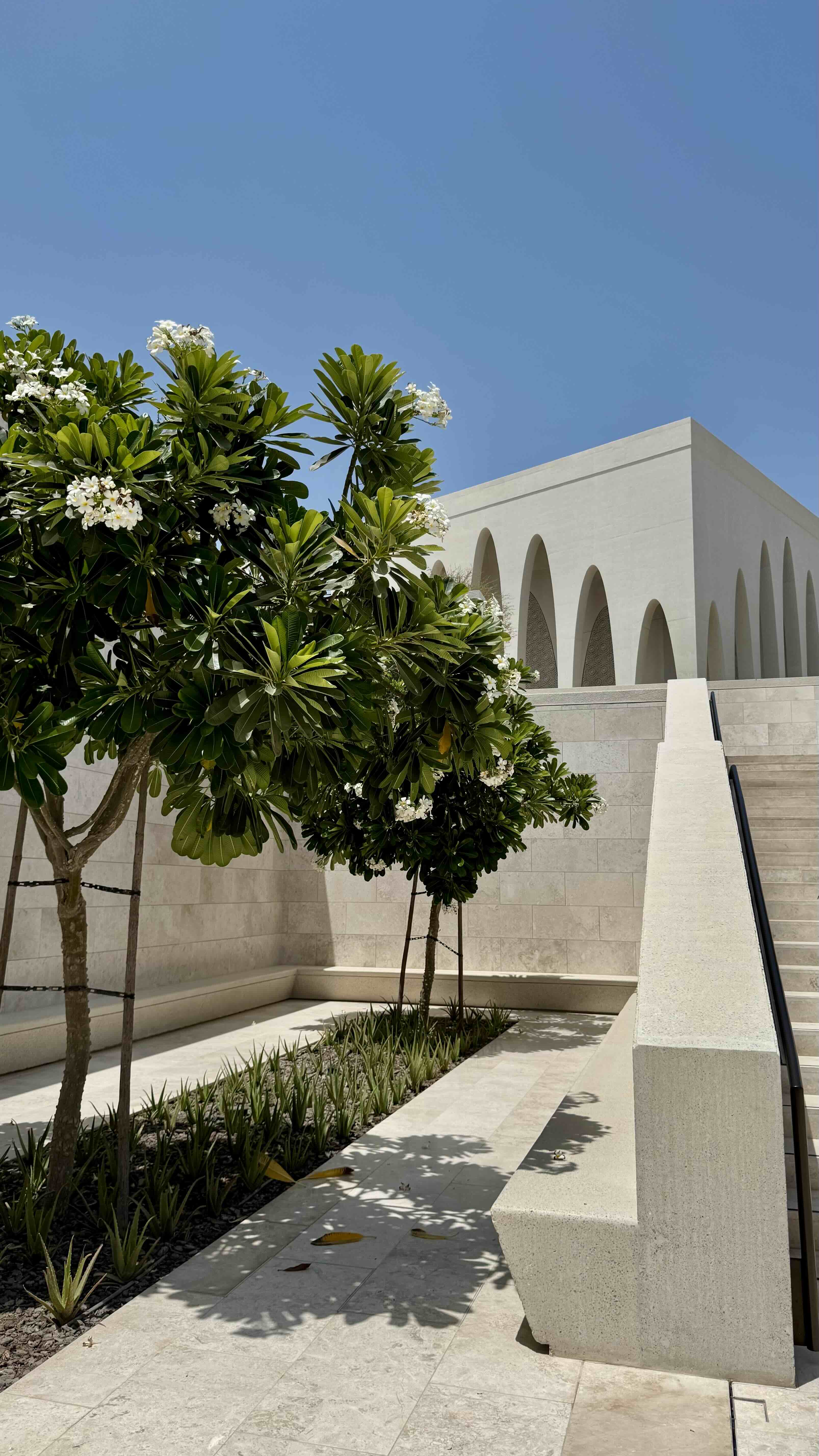
Between the three sanctuaries stretches a garden — a living symbol of dialogue and peace. It is a place where nature mediates between faiths, architecture becomes a backdrop for silence, and walking along stone paths turns into an act of reflection.
There are no high walls here — only open sky, trees, and light filtering gently through leaves. The plants come from different parts of the world, just like the religions that surround the garden. They do not compete; they coexist. Each contributes its own scent, shade, and form. Even the stones of the pathways, polished by countless footsteps, become a metaphor for a shared journey.
The garden is a place of meeting — for conversation, rest, and quiet presence. One can sit and watch the wind move through branches, children play in the shade of colonnades, and visitors from different cultures walk side by side. Here, the distinction between “you” and “me” slowly dissolves, leaving only “us”.
In the silence of the garden, the voice of unity can be heard — not loud or ceremonial, but calm, confident, and peaceful. A reminder that we share the same roots, and that in this place, after centuries of division, they finally begin to grow together again.
Travel tips
💡 Practical Tips
The Abrahamic Family House is more than an architectural landmark.
It is a place where peaceful coexistence can be felt, not just imagined.
The complex is open to everyone — believers and non-believers, seekers and the simply curious. No ticket is required, but something else matters more here: respect, silence, and openness. This is not a place to rush through, but one to experience slowly.
The best time to visit is during the golden hour, shortly before sunset. As the light softens, the white stone façades warm in color, and sunlight filtering through arches and screens turns into a quiet prayer made of light. It is a genuinely transformative experience.
Important: avoid bringing unnecessary items. Security screening at the entrance is strict, similar to airport checks.
Bring less — and arrive with a readiness for reflection and dialogue.
• 📸 Photography is allowed, but always with respect for silence and other visitors.
• 🧕 Entry to the mosque requires women to cover their heads; appropriate clothing is provided on site if needed.
• 🤫 Maintain silence — this is not just a tourist attraction, but a spiritual space.
• 🎧 Check the official website for schedules — lectures, concerts, and interfaith events are often held here.
• 🧴 Bring water and sun protection, especially during the hotter months.
• ♿ The entire complex is fully accessible for visitors with limited mobility.
How to get there
🚗 How to Visit
Entrance to the complex is free, but advance registration on the official website is required:
🔗 abrahamicfamilyhouse.ae
• 🕙 Opening hours: daily from 10:00 AM to 6:00 PM
• 📲 Registration: completed online; a QR code is sent by email
• 💳 Tickets: not required, admission is free
• 👗 Dress code: modest clothing; women are provided with abayas and headscarves if needed
• 🚪 Last entry: one hour before closing
Getting there:
• 🚗 By car: approximately 20 minutes from central Abu Dhabi. On-site parking is available.
• 🚕 By taxi: a fast and convenient option from anywhere in the city.
• 🚌 By bus: public transport operates to Saadiyat Island, though schedules should be checked in advance.
• 📍 Best option: taxi or rental car via Sheikh Khalifa Highway (E12).